

Services
Transcranial Photobiomodulation
Melita ReGen Lab · San Diego
Transcranial Photobiomodulation
+ Low Intensity PEMF
Neurological Recovery · Cellular Restoration · Deep Systemic Repair
One of the most sophisticated recovery pairings in modern clinical wellness — combining transcranial and transdermal light therapy with pulsed electromagnetic field stimulation for deep, systemic cellular restoration.
Book Now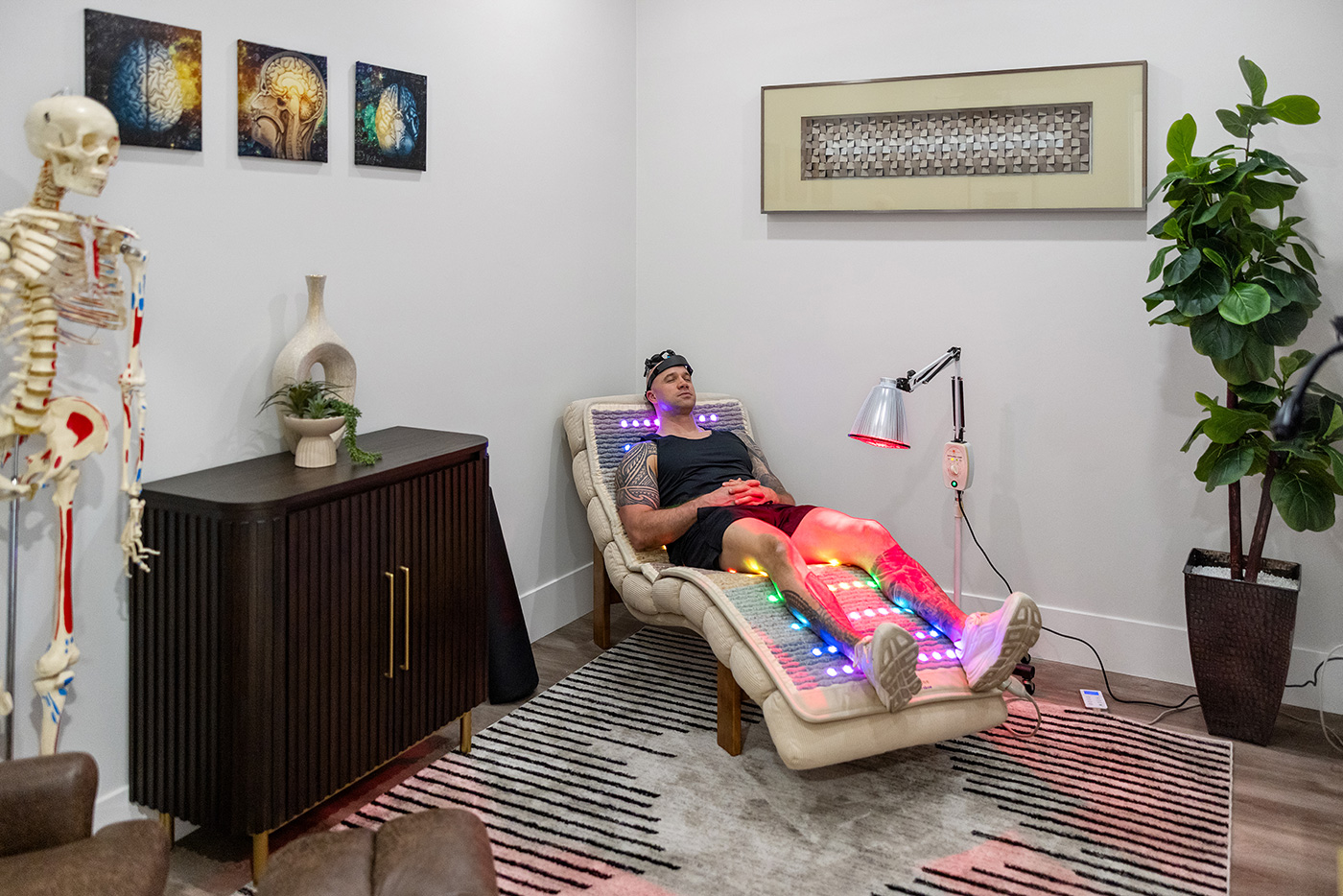
The Science
Recovery at the
Deepest Biological Level
Transphotobiomodulation takes red and near-infrared light therapy further than surface-level application. By delivering therapeutic light energy both transcranially — through the skull and into brain tissue — and transdermally across the body, it targets neurological recovery alongside systemic cellular repair. This makes it uniquely suited to the intersection of physical and cognitive recovery.
Low intensity PEMF (Pulsed Electromagnetic Field therapy) operates on the body's own electromagnetic language. Every cell in the human body maintains an electrical charge across its membrane. Injury, chronic inflammation, stress, and aging all disrupt this charge. Low intensity PEMF delivers frequencies that mirror the earth's natural electromagnetic field — gradually restoring cellular membrane potential, supporting ion transport, and reactivating the body's innate healing response.
Together, these two amenities address recovery at a level most clinical interventions never reach — the electrical and photonic environment within and around the cell itself.
Evidence-Based Benefits
- Neurological recovery support — including cognitive fatigue, brain fog, and post-concussive recovery
- Deep reduction of systemic and localized inflammation
- Cellular membrane restoration and improved ion channel function
- Enhanced mitochondrial efficiency and ATP synthesis
- Improved sleep quality and circadian rhythm regulation
- Reduction in chronic stress-driven physiological patterns
- Support for autonomic nervous system balance and parasympathetic tone
- Accelerated deep tissue repair in areas resistant to surface amenities
- Mood regulation and neurochemical balance support
Understanding the Pairing
Two amenities.
One Biological Goal.
Delivers therapeutic wavelengths of light transcranially and transdermally — penetrating tissue, bone, and in the case of cranial application, neural tissue. Cytochrome c oxidase in the mitochondria absorbs this light energy, triggering increased ATP production, reduced oxidative stress, and the activation of neuroprotective and anti-inflammatory gene expression. The neurological application addresses recovery at a level no surface-level modality reaches.
Pulsed electromagnetic fields at low intensity work with the body rather than overwhelming it. By restoring the transmembrane potential of damaged or dysfunctional cells, PEMF reactivates cellular processes that inflammation, stress, and injury have suppressed. At low intensity, the frequencies are gentle and cumulative — designed for daily use, systemic influence, and the gradual restoration of the body's electrical baseline. This is recovery infrastructure, not acute intervention.
When combined, these amenities address both the energetic and electromagnetic foundations of recovery simultaneously — creating conditions where the body can heal more completely, more efficiently, and with less systemic resistance.
Benefits In Depth
The Full Clinical Range of
Transphotobiomodulation + Low PEMF
This pairing operates at the intersection of neuroscience, cellular biology, and electromagnetic medicine. The conditions it addresses span neurological, psychological, inflammatory, and structural domains — reflecting the depth at which these two amenities work.
Transcranial photobiomodulation delivers near-infrared light directly into neural tissue, supporting mitochondrial recovery in injured neurons, reducing neuroinflammation, and promoting the neuroprotective signalling cascades disrupted by TBI. PEMF complements this by restoring cellular membrane potential in compromised neurons and supporting the glymphatic clearance of inflammatory debris — a process critical to TBI recovery that sleep disruption frequently impairs.
Persistent post-concussive symptoms — headache, brain fog, light sensitivity, sleep disruption, mood changes — reflect ongoing neurological dysfunction rather than structural damage. Transcranial photobiomodulation addresses the mitochondrial and inflammatory mechanisms driving these symptoms, while low PEMF supports autonomic nervous system rebalancing that concussion frequently destabilizes. Clinical outcomes in post-concussive presentations with this pairing are among the most compelling applications in the facility.
Transcranial photobiomodulation of the prefrontal cortex has demonstrated measurable antidepressant effects in clinical trials — increasing cerebral blood flow, supporting serotonin and dopamine pathway function, and improving the metabolic activity of prefrontal networks implicated in mood regulation. Low PEMF reinforces this through autonomic nervous system regulation and the restoration of cellular signalling disrupted by chronic stress physiology.
Fibromyalgia is fundamentally a condition of central sensitization — an amplified pain response driven by dysfunctional central nervous system processing. Both amenities address the neurological and cellular environments that sustain sensitization: photobiomodulation reduces central inflammatory signalling and supports thalamic function, while PEMF restores cellular membrane stability and normalizes the aberrant electrical signalling that characterizes sensitized pain pathways.
Mitochondrial dysfunction is increasingly recognized as a central mechanism in CFS — cells that cannot produce adequate ATP cannot sustain normal physiological function. Photobiomodulation directly addresses this by restoring mitochondrial efficiency. PEMF supports cellular membrane function and ion transport, reducing the energetic cost of maintaining cellular homeostasis and allowing the system to operate closer to normal capacity.
Both amenities demonstrate anti-inflammatory effects that operate independently of the immune pathway — making them valuable adjuncts in autoimmune conditions where pharmaceutical immunosuppression carries significant side effect burden. Photobiomodulation reduces pro-inflammatory cytokine expression at the cellular level. PEMF modulates the electromagnetic environment of immune cells and has been studied for its effects on autoimmune inflammatory markers in conditions including rheumatoid arthritis and lupus.
Transcranial photobiomodulation has been investigated for its neuroprotective effects in age-related cognitive decline and neurodegenerative conditions — increasing cerebral perfusion, supporting synaptic plasticity, and reducing amyloid-related neuroinflammation in preclinical models. For those focused on cognitive longevity, the combination of photobiomodulation and PEMF offers a non-pharmacological approach to maintaining brain function over time.
Low PEMF frequencies that mirror the delta and theta brainwave ranges have demonstrated entrainment effects — gently shifting the nervous system toward the brainwave states associated with deep sleep and restoration. Combined with photobiomodulation's support of melatonin production and circadian rhythm regulation, this pairing addresses insomnia at both the neurological and hormonal level — without pharmaceutical intervention.
Peripheral and central neuropathic pain — driven by damaged, dysfunctional, or sensitized nerve tissue — responds to both amenities through distinct but complementary mechanisms. Photobiomodulation supports Schwann cell function and axonal regeneration in peripheral nerves. PEMF modulates the transmembrane ion channels that control nociceptor threshold and pain signal transmission. Together they address neuropathic pain at its source rather than masking its output.
Chronic psychological stress drives a cascade of physiological changes — elevated cortisol, sympathetic dominance, mitochondrial impairment, immune dysregulation — that accumulate into the conditions that bring clients through clinical doors. This pairing addresses multiple nodes of that cascade: restoring mitochondrial function, rebalancing autonomic tone, reducing systemic inflammation, and supporting the neurological recovery that stress biology consistently impairs.
Following peripheral nerve injury — from trauma, entrapment, or surgical damage — the speed and completeness of recovery depends on the cellular environment surrounding the nerve. Photobiomodulation accelerates Schwann cell proliferation and remyelination, while PEMF supports the bioelectrical conditions that facilitate axonal regrowth. The combination has demonstrated accelerated sensory and motor function recovery in peripheral nerve injury research.
Beyond any specific condition, the daily application of photobiomodulation and low PEMF creates a cellular environment that is measurably younger in its functional characteristics — higher ATP output, lower oxidative stress load, better membrane integrity, and more efficient cellular communication. For those investing in long-term health rather than managing acute conditions, consistent use of this pairing is one of the most evidence-supported longevity tools available without a prescription.
Who It's For
For Those Who Recover
with Precision
Post-concussive support, traumatic brain injury recovery, and cognitive fatigue — addressed at the neural tissue level.
For those managing systemic inflammatory conditions that have proven resistant to conventional approaches.
Support circadian rhythm, autonomic nervous system balance, and the physiological patterns that chronic stress disrupts.
Recover cognitive bandwidth alongside physical capacity — a protocol built for people whose brain is their primary performance tool.
For injuries and conditions where surface-level amenities have failed to reach the source of dysfunction.
Invest in mitochondrial function and cellular electrical integrity as core pillars of long-term health.
Please Note — Transphotobiomodulation and low intensity PEMF are non-invasive amenities with strong safety profiles. However, they may not be appropriate for individuals with implanted electronic devices (pacemakers, cochlear implants), active malignancies, pregnancy, or photosensitive conditions. If you are under medical care for a neurological condition, we recommend discussing this protocol with your physician prior to your first session. Our team is available to answer any questions before you begin.
Included in Every Membership
Access This — and Every Modality — Every Day.
Transphotobiomodulation + Low Intensity PEMF is one of six clinically curated amenities included in your Melita ReGen Lab membership. Unlimited access. One flat monthly rate. No per-session fees.
Full access to all six recovery amenities for one day. No commitment required.
One-on-one with our coaching team. See what clinically informed training looks like.
Membership spots are limited · Melita ReGen Lab · San Diego
EXCELLENT Based on 38 reviews
 Posted on Google
 Angelo KClean gym, new equipment, & Amazing staffPosted on Google
 Keith PetersenThe best of the best places to go for any sports injury if you want to find out what truly is causing the pain and what to do about it.Posted on Google
 Mack KI’ve had appointments with Dan and he is very knowledgeable and explains everything super clearly so that you leave with lots of information on how to actually improve your physical health. All the staff are very friendly and helpful as well.Posted on Google
 Sanford PeisnerI looked at several gyms with personal trainers. Melina wasn’t high pressured. They have so many options from message to PMF. The trainers are excellent. Sydney is fabulous. I have personally seen and feel the difference. Highly recommended. I went from having neck and knee issues to no pain. It was hard work. I was sore but what a difference. Highly recommendedPosted on Google
 Paulina RiedlerI’ve been training here for several months and had my first session with Dan this morning to relieve some chronic issues after multiple surgeries. He was able to pinpoint things I had no idea about, and I have seen a lot of physical therapists, doctors, and chiropractors. It is well worth a session if you’re someone like me who has struggled finding someone who can recognize quickly what’s actually going on. The trainers are great, especially Sydney, she will kick your butt in the best way! The place is always kept immaculately clean and the location is convenient. I highly recommend coming here if you’re looking for a team that will help you feel your best!Posted on Google
 OThey have great equipment and knowledgeable staffPosted on Google
 Gretchen MorganAfter trying everything including ART, doctor, acupuncture, yoga, etc for 8 months I went to ONE appointment with Dan Melita and felt a huge improvement. He really knows his stuff!Posted on Google
 Maria NolanFantastic experience! I have heard about Dan for years and was extremely impressed with his knowledge and professionalism.Posted on Google
 Edit The SinkDan is an impressive human and he will fix you.
11689 Sorrento Valley Road, Suite Q San Diego, CA 92121